

Blog
Air Pollution Affects the Brain – How?

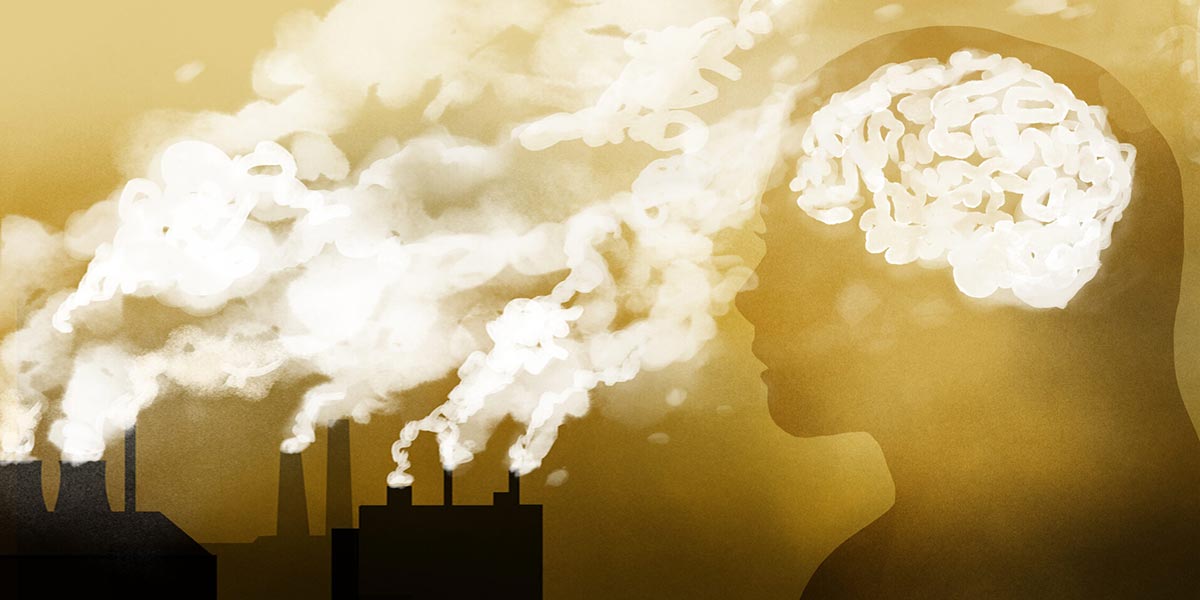
Experts from Harvard convened on a panel to discuss the impact of air pollution on the brain. They are examining the connection between air pollution and dementia, as well as its implications for learning, mental health, and mood. Francesca Dominici, the panellist, is one of the world’s leading data scientists studying the health effects of fine particles. He pointed out that more and more evidence is emerging that exposure to air pollution increases the onset and progression of Alzheimer’s disease, Parkinson’s disease, and other neurocognitive diseases.
There is a clear link between air pollution, dementia, learning, mental health, and mood
In addition to external air pollution, internal pollution was also discussed. Panellists explained the physiological pathways by which particles travel through the human body.
Professor Joseph Allen noted that his research has demonstrated that indoor air pollution also impacts mental health. He explained that it often leads to anxiety and suicidal ideation, especially in children. The professor illustrated that OSHA‘s standard for workplace air pollution is currently 5,000 micrograms per cubic meter. That is more than 500 times the standard for outdoor air. So, the value limited by OSHA’s standard is drastically outdated and unacceptably high. Unfortunately, the agency lacks the authority to establish standards outside the work environment, such as in classrooms or offices.
SEE ALSO: Air Pollution Increases Cancer Risk – New Scientific Findings
SEE ALSO: How PM2.5 Particles Threaten Heart Health
SEE ALSO: Prioritize mental health in the workplace
The importance of education about air pollution through the “Air We Breathe” program
Maite Arce from the Hispanic Access Foundation emphasised the importance of education about air pollution in Latino communities through the “Air We Breathe” program. The program brought together citizen scientists from 12 communities to study air pollution and air quality. They collected data using sensors installed in churches to monitor local air pollution levels.
The discussion also included the new EPA regulations on fine particles. The new maximum permissible level of PM2.5 by the EPA was reduced from 12 to 9 µg/m3. You can read more about this change in the standard at the link. While this was hailed as a significant victory for public health, it was pointed out that there is no safe level of particulate pollution and that the standard could be lower.
Joseph Allen highlighted the stark difference between legally binding outdoor and indoor particulate limits, noting the lack of a national standard for indoor air quality. It has been stated that well-designed buildings and high-quality air filters can significantly enhance indoor air quality.
The following conclusions of the panel on the impact of polluted air on the brain were highlighted.
The panelists concluded the event by answering a question about what they would change today to improve air quality.
Maite Arce emphasised the importance of involving a wide range of scientists, citizens, and volunteers.
Joseph Allen underlined the need for changing standards in building design and management.
Francesca Dominici proposed closing all coal-fired power plants.
Weisskopf proposed tightening EPA standards by lowering the permissible limit values of fine particles in the air.
You can find more about the report from this panel, which was attended online by representatives of Marquis Intelligence, at the following link.
This article is part of the “Air Pollution and Health” series, in which Marquis Intelligence, as a socially responsible company, raises awareness about the harmful impact of polluted air on human health.
Document: MC-AP&H-002.24 – Air Pollution Affects the Brain – How?
