

Blog
EPA reduces the permissible concentration of PM2.5 with a new standard

On February 7, 2024, the U.S. Environmental Protection Agency (EPA) adopted a new air quality standard for particulate matter (PM). The EPA aligned this standard with the latest scientific evidence. That evidence shows a strong link between PM pollution and human health. Therefore, the EPA tightened the limits for PM particles. As a result, the “health-safe” level is now significantly lower.
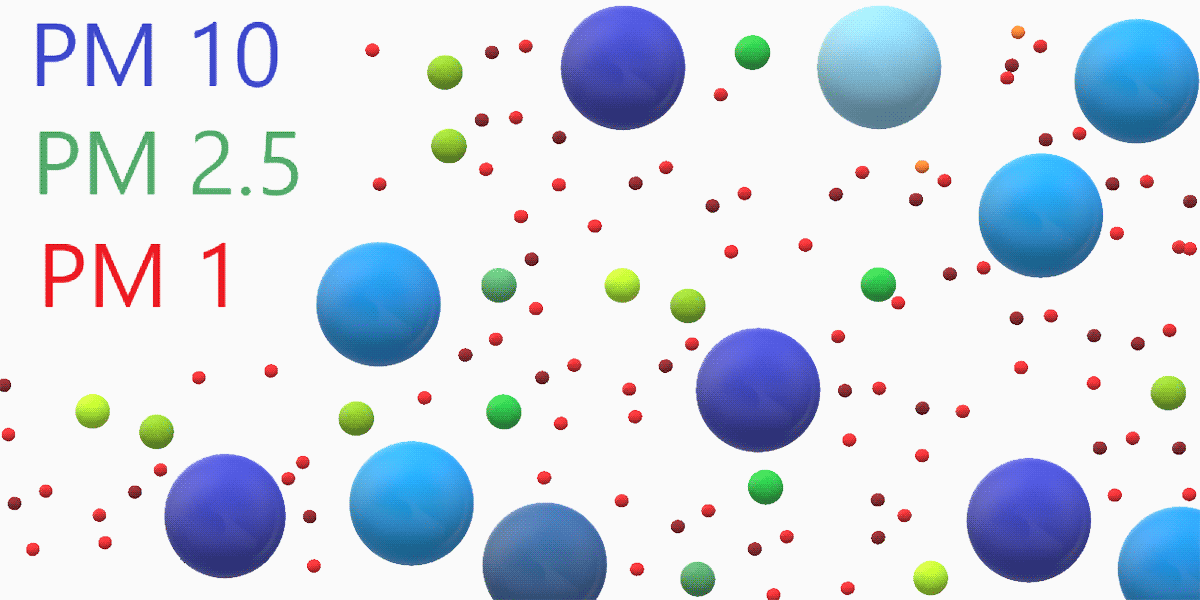
PM Particle Categories
Scientists introduced the PM1, PM2.5, and PM10 categories to make particle sizes easier to understand.
Each PM category includes all smaller particles. In other words, PM levels are cumulative.
-
PM10 includes all particles smaller than 10 µm. It also includes PM2.5 and PM1.
-
PM2.5 includes all particles smaller than 2.5 µm. It also includes PM1.
-
PM1 includes all particles smaller than 1 µm.
The New EPA PM Standard: Safe Values
The EPA reviewed the annual National Ambient Air Quality Standard (NAAQS) for health impacts. Then it lowered the allowed level of fine particles.
Specifically, the EPA reduced the annual PM2.5 limit from 12 µg/m³ to 9 µg/m³. This stricter limit should improve air cleanliness for families, workers, and communities. Consequently, it should support better overall public health.
Next, the new PM2.5 limit required updates to the Air Quality Index (AQI). So the EPA revised the AQI thresholds.
-
The boundary between Good (green) and Moderate (yellow) air quality is now nine µg/m³.
-
The EPA also lowered the thresholds for Unhealthy, Very Unhealthy, and Hazardous categories.
-
For example, air becomes Hazardous at 225.5 µg/m³, instead of the earlier 250.5 µg/m³.
Why Did the EPA Introduce a New PM Standard?
Recent research shows clear links between PM pollution and many diseases. Above all, PM affects the heart and lungs.
However, PM pollution also impacts:
-
pregnancy outcomes and newborn mortality,
-
mental health,
-
eye health.
See also:
>> ALSO SEE: How Air Pollution Contributes to Cataract Development
>> ALSO SEE: Prioritize mental health in the workplace
>> ALSO SEE: The Stunning Impact of Air Pollution on In Vitro Fertilization Success
PM pollution harms the most sensitive groups. This includes children, pregnant women, older adults, and people with existing health issues.
Many studies show how microscopic particles penetrate deep into the lungs. Then they trigger serious health effects. For instance, PM increases asthma attacks. As a result, people miss more school and work days. PM also raises the risk of heart attacks. Therefore, emergency care needs rise. In the worst cases, PM exposure leads to premature death.
Health Benefits of the New PM Standard
The EPA estimates major benefits from implementing the revised standard.
-
It could prevent up to 4,500 premature deaths.
-
It could also avoid about 290,000 lost workdays.
-
In addition, it could deliver up to $46 billion in net health benefits by 2032.
So, every dollar invested in PM reduction brings a strong return.
Primary Sources of PM Pollution
PM pollution comes from many sources. For example:
-
Combustion processes,
-
Construction sites,
-
Industrial production,
-
Transportation.
In addition, chemical reactions in the atmosphere create new particles. These reactions involve pollutants such as sulfur dioxide (SO₂) and nitrogen oxides (NOₓ). Power plants, gasoline and diesel engines, and several industrial activities emit these gases. Consequently, they increase PM levels.
A Broader EPA Strategy
The EPA supports the revised PM standard with complementary measures. These measures target emissions from key sources. They also require significant investment. Yet the goal remains clear: drive economic growth and build healthier communities at the same time.
Therefore, the EPA strategy focuses on long-term health and productivity. It also supports renewed industrial output in the U.S.
Significantly, PM pollution does not affect all communities equally. It harms vulnerable groups more. Because of that, stronger Clean Air Act standards matter. They improve national air quality and protect everyone more fairly.
To learn more, visit the official EPA webpage on the revised PM2.5 standard.
This text by Marquis Intelligence is part of the series “Air Quality and Ventilation Standards.”
Document number: MI-NewLegislation-002.24 – EPA reduces the permissible concentration of PM2.5 with a new standard.

About Marquis Intelligence Team
The Marquis Intelligence team brings together experts from diverse fields, dedicated to improving indoor air quality. We stand out by delivering advanced, tailor-made ventilation systems that ensure safety and comfort across all types of facilities. Our approach combines comprehensive support with cutting-edge technology to address a wide range of complex air quality challenges.
View all posts by Marquis Intelligence Team