

Blog
Grande Case Study: Electrostatic Precipitator at Dijamant, Zrenjanin

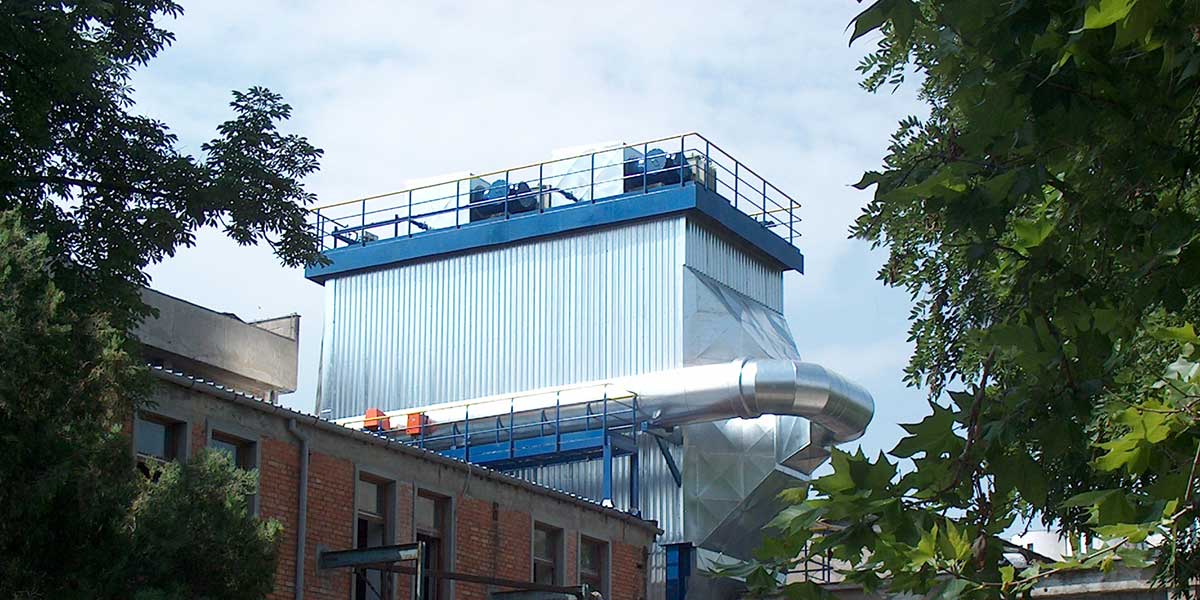
The electrostatic precipitator (ESP) installed at the Dijamant edible oil production plant in Zrenjanin was the central component of a complex turnkey project. The project addressed exceptionally high particulate matter emissions from the combustion of sunflower husks, allowing the plant to continue using this biomass as fuel.
However, the project involved much more than installing an electrostatic precipitator. It also included continuous particulate emission monitoring, improving the plant’s energy efficiency by recovering heat from flue gases, and collecting and conveying the separated ash.
Another major challenge was integrating large new equipment into an existing plant. This required partial demolition of the building and associated construction work.
Finally, an independent accredited laboratory had to verify the plant’s performance through emission measurements.
Who Did Dijamant Entrust with the Project?
Dijamant entrusted the engineering design and execution of the project to Marquis Commerce, Belgrade. Working with a partner, the company delivered the complex system on a “turnkey basis”.
In other words, Marquis Commerce was responsible for the entire process: from developing the technical solution and detailed engineering designs to equipment supply, installation, and commissioning. The project documentation comprised the main civil engineering, electrical engineering, and mechanical and process engineering designs.
The contract signing received media coverage. A recording of the event by KTV television is still available on the Marquis Intelligence YouTube channel.
Sunflower Husks as Fuel
Sunflower processing generates substantial quantities of sunflower husks. At Dijamant, these husks were regarded not as waste, but as a valuable resource. This energy-rich biomass was used as fuel to generate process steam.
Boiler K5, manufactured by Minel Kotlogradnja, had a steam generation capacity of 25 t/h and could operate on either natural gas or sunflower husks. When operating on biomass, natural gas was used primarily for start-up, until stable sunflower husk combustion had been established.
Using sunflower husks made it possible to replace approximately 70% of natural gas consumption. The project presentation assumed a daily consumption of approximately 84 tonnes of sunflower husks, with an energy benefit equivalent to saving around 1,600 Nm³ of natural gas per hour.
The economic justification for using biomass as fuel was clear. The problem was particulate matter emissions.
Particulate Emissions 32 Times Above the Limit
Measurements carried out in 2003 in the flue gas duct of boiler K5 showed a total particulate matter concentration of 1,630.04 mg/Nm³, with the boiler operating at a steam generation rate of 11 t/h. The applicable emission limit at the time was 50 mg/Nm³.
The measured concentration was therefore more than 32 times the permitted limit, resulting in the shutdown of the boiler. The problem was no longer purely environmental. Shutting down the boiler also meant losing the opportunity to use biomass as a virtually free fuel in place of substantial quantities of natural gas.
The solution therefore had to meet process, environmental, and economic requirements simultaneously.
Electrostatic Precipitator at Dijamant – Price or Technical Challenge?
Several serious suppliers competed for the project. The decisive factor in selecting the supplier was not simply the equipment price, but its technical characteristics and the manufacturer’s experience. Selecting an electrostatic precipitator to clean flue gases generated by sunflower husk combustion represented a significant technical advance, extending beyond the local context.
Sunflower oil production processes differ in how the raw material is initially prepared. Most producers do not dehull sunflower seeds. As a result, sunflower husks are not separated as a distinct process by-product. Because of their low bulk density, separated sunflower husks present particular challenges in storage, conveying, and subsequent use. Boiler plants designed to burn this biomass must therefore be adapted to its specific characteristics.
This is what made the application of an electrostatic precipitator to flue gases from sunflower husk combustion particularly distinctive.
Sunflower husks cannot simply be treated as equivalent to wood or wood pellets. Their structure, moisture content, and organic constituents affect combustion and the properties of the resulting particles. The analysed sunflower husk composition included, among other constituents, approximately 3% oil.
Why Was an ESC Umwelttechnik Electrostatic Precipitator Selected?
The selected solution was supplied by the German company ESC Umwelttechnik GmbH. An important advantage was the experience of its owner, Jürgen Fischer, with biomass of similar characteristics, including rice husks. Other solutions under consideration relied more heavily on experience with woody biomass.
For a plant of this type, nominal airflow capacity and declared collection efficiency are not sufficient selection criteria. Engineers must understand the actual process that generates the flue gas. That process determines the properties of the particles and other pollutants and, consequently, the appropriate technical solution.
Marquis Commerce as Engineering Designer and System Integrator
As already noted, the project scope extended far beyond the electrostatic precipitator itself.
The proposed system included a new waste heat recovery heat exchanger, an ESC Umwelttechnik electrostatic precipitator, a flue gas particulate monitoring system, an ash discharge and conditioning system, connection to the existing induced-draft fan, new flue gas ducts, piping, thermal insulation, maintenance access provisions.
Marquis Commerce prepared the project documentation through three coordinated engineering disciplines: civil, electrical, and mechanical/process engineering.
The project was therefore not simply a matter of installing an electrostatic precipitator between the boiler and the chimney. It involved creating a new, integrated process system in which all components had to function together.
Electrostatic Precipitator from a Reliable German Manufacturer
The electrostatic precipitator installed at Dijamant in Zrenjanin was manufactured by ESC Umwelttechnik, Germany, type 400/ESC/1 × 2 × 10 × 6 × 3.0.
The unit was designed for a flue gas flow rate of 33,100 Nm³/h, equivalent to approximately 50,000 m³/h under operating conditions. The design inlet particulate concentration was 6 g/Nm³, while the guaranteed outlet concentration was a maximum of 50 mg/Nm³.
The precipitator had two sections and ten gas passages. The specified collecting electrode area was 720 m², or 960 m² of developed surface area for the sigma-profile collecting electrodes. Each section had its own high-voltage power supply unit, with a nominal high voltage of 111 kV and a rated power of 15.54 kW per unit.
How the Electrostatic Precipitator Separates Particles
Inside the electrostatic precipitator, particles are first electrically charged in the corona discharge zone. The corona discharge is generated at the discharge electrodes installed in each of the ten passages between the rows of collecting electrodes. Under the influence of the electric field, negatively charged particles migrate towards the collecting electrodes, where they are separated from the flue gas stream.
A layer of collected particulate matter gradually forms on the collecting electrodes. The accumulated material is removed by a mechanical rapping system using hammers.
SEE ALSO: FAQ 2 – Marquis Intelligence Solutions
The design of discharge electrodes has changed significantly throughout the development of electrostatic precipitators. Early designs used thin wires and, later, serrated elements. These were more susceptible to mechanical damage and operational interruptions. Modern designs use rigid discharge electrodes with pointed emission elements, providing substantially greater reliability.
During operation, positively charged particles also accumulate on the discharge electrodes. These deposits are likewise removed by rapping.
All electrodes are cleaned through periodic mechanical rapping. The cleaning process is automated, and the rapping interval and frequency can be adjusted to suit operating conditions. At the Dijamant plant, the rapping interval was set to less than five minutes.
The electrostatic precipitator was also equipped with a system for optimizing electrical energy consumption.
Waste Heat Recovery from Flue Gases
Before entering the electrostatic precipitator, the flue gases passed through a new waste heat recovery heat exchanger. The unit was designed to handle approximately 50,000 m³/h of flue gas. It reduced the flue gas temperature from approximately 240–290 °C to 130 °C. The recovered heat was used to preheat demineralized water for the steam-generating boiler plant.
This arrangement recovered part of the thermal energy contained in the flue gases. At the same time, it provided suitable operating temperatures for the electrostatic precipitator and reduced the amount of heat discharged into the atmosphere.
Removing Ash from Flue Gas Is Not the End of the Process
Flue gas cleaning does not end when particulate matter is separated from the gas stream. After separation, both the collected particles and the cleaned flue gases continue through the system, but along different paths.
The Path of the Collected Ash
When the electrodes are rapped, the collected ash falls into the ash collection hopper. From there, a system of screw conveyors removes it from the electrostatic precipitator. The project included a dry ash screw conveyor, an ash conditioning and moistening system, a conveyor for moistened ash.
Special enclosed containers were also designed to collect the separated ash and transport it away from the factory premises.
The Path of the Cleaned Flue Gases
Measuring Residual Particulate Matter in Flue Gases
After passing through the electrostatic precipitator, the cleaned flue gases flow through the flue gas ducts, past the monitoring station, and into the chimney.
At the advanced monitoring station, particulate matter concentration is measured directly in the flowing flue gas using laser-based measurement technology. More than twenty years ago, this was exceptionally sophisticated equipment.
In Engineering, Every Detail Matters
In an electrostatic precipitator, numerous design details directly affect reliability, collection efficiency, and service life.
Dedicated Ventilation for High-Voltage Insulators
The high-voltage insulators mounted on top of the electrostatic precipitator were provided with a dedicated ventilation system. The system supplied thermally conditioned and filtered air to prevent contamination and condensation on the insulators. Such conditions could otherwise lead to the formation of electrical leakage paths along the insulator surfaces.
Rounded Internal Edges of the Precipitator and Ash Hopper
The project demonstrated how details that may initially appear insignificant can influence the final result.
The internal geometry had to be designed to avoid areas where dust could accumulate unnecessarily. For this reason, the internal edges of both the precipitator housing and the ash hopper were rounded. This reduced the risk of collected ash accumulating and adhering in corners.
Thermal Insulation and Electric Heating Elements
Insulating the large precipitator housing and ash hopper presented a particular challenge. The insulation was installed on welded insulation pins, with special attention to minimizing thermal bridges. A flexible electric heating element was also installed beneath the insulation, following a serpentine pattern across the surface.
Its purpose was to help maintain the required surface temperature and prevent unwanted condensation.
Today, such a detail may seem like a logical part of the design. Two decades ago, however, finding a domestic company willing and able to install this type of specialized insulation on the precipitator and its large ash hopper was far from straightforward.
Details such as these often determine whether equipment that performs well in the design stage will also operate reliably under actual plant conditions.
Ash Conditioning and Moistening
Moistening the collected ash was an important part of ensuring its safe removal and transport. Adding water reduced the possibility of smouldering particles remaining in the collected ash, as well as the risk of fine dust becoming airborne again during handling and transport.
At the same time, the moistened particles tended to bind together. This reduced the loose, free-flowing nature of the ash and facilitated its controlled transport and disposal.
Trial Operation and Final Commissioning
During the initial trial operation of the plant, the monitoring equipment indicated very low particulate matter concentrations. However, during the first morning inspection, a sudden deterioration in performance was observed. The readings had exceeded the measurement range of the continuous particulate emission monitoring system.
An analysis of the operating procedures, together with discussions with the boiler plant operators, identified the cause. During the night, the operators had carried out steam sootblowing unusually frequently and for extended periods, exercising additional caution while operating the new equipment.
The increased moisture content of the flue gases caused ash to adhere more strongly to the electrodes, forming deposits. These deposits reduced the effective electrode surface area and impaired the performance of the electrostatic precipitator.
The operators received more detailed operating instructions. The electrodes were thoroughly cleaned by rapping, and the automatic rapping intervals were shortened. These measures improved electrode cleaning and stabilized system operation.
Following final commissioning, guarantee performance measurements were carried out.
Guarantee Measurements Confirmed Collection Efficiency
The project results were verified by the accredited laboratory A.D. Bio-ekološki centar, Zrenjanin. On 14 June 2006, the laboratory carried out emission measurements using the prescribed methods.
The measured mean particulate matter concentrations were:
- 17 mg/Nm³
- 23 mg/Nm³
- 32 mg/Nm³
The applicable emission limit at the time was 50 mg/Nm³.
Following the guarantee measurements and further optimization during operation, particulate emissions were reduced to below 20 mg/Nm³. In other words, compared with measurements taken before the electrostatic precipitator was installed, particulate matter emissions were reduced by more than a factor of 80.
A Significant Investment with a Short Payback Period
The technological part of the investment amounted to approximately EUR 750,000. Additional construction, reconstruction, and associated works increased the total investment to approximately EUR 900,000.
The techno-economic analysis assessed the value of the energy obtained by burning sunflower husks against the cost of alternative energy sources.
Based on the official industrial natural gas price at the time, the estimated payback period for the technological part of the investment was 88 operating days.
The analysis was also verified by comparing the energy equivalent of sunflower husks with the cost of the natural gas or electricity required to produce the same amount of energy. When the broader investment scope was considered, both approaches indicated a payback period of approximately 8–9 months.
In this case, environmental protection was not simply a regulatory compliance cost. The investment enabled the plant to continue using its own energy resource.
More Than Two Decades Later
More than two decades have passed since the project was completed.
After completion and the expiry of its contractual obligations, Marquis Commerce was no longer involved in the plant’s regular operational monitoring. In the meantime, the applicable particulate emission limits have become more stringent.
According to Predrag Nenin, Quality and Environmental Manager at Dijamant, the electrostatic precipitator continues to meet the current particulate emission requirements. This may be the most important long-term confirmation of the project’s success.
The system was not designed merely to comply with the 50 mg/Nm³ limit applicable immediately after commissioning. Further optimization and the achievement of concentrations below 20 mg/Nm³ provided an additional performance margin. This margin allowed the system to remain suitable for continued operation even after regulatory requirements became stricter.
A Project That Connected Two Professional Careers
On the client’s side, the project was managed by professionals directly responsible for investment projects, maintenance, and technical implementation at Dijamant.
Momčilo Ćuk, then Director of Investments and Maintenance, played a key coordination role throughout the project.
Other key representatives of the client included Sava Dutina and Gordana Petrović, now Gordana Blagić. They were responsible for supervising the electrical and mechanical installation works on behalf of the client during the electrostatic precipitator project.
After the project was completed, Gordana joined Marquis Commerce. As a licensed engineer for design and construction works, she continued working on the engineering and implementation of ventilation, air quality, and process engineering systems.
What Does the Dijamant Electrostatic Precipitator Project Demonstrate Today?
The Dijamant project demonstrates that successful industrial flue gas cleaning depends on more than selecting the right equipment. It also depends on how well the solution is adapted to the specific fuel, plant, and actual operating conditions.
In this case, the challenge was to enable continued use of sunflower husks as fuel, address exceptionally high particulate matter emissions, and integrate the new system into an existing energy plant.
The result was an electrostatic precipitator that reduced particulate matter emissions by more than a factor of 80, while achieving a remarkably short investment payback period.
More than 20 years later, according to confirmation from the plant operator, the same electrostatic precipitator continues to meet the applicable particulate emission requirements.
The long-term durability of the achieved results may be the strongest evidence of the project’s value.
References
- Marquis Commerce d.o.o. Main Mechanical and Process Engineering Design for Addressing Particulate Emissions from Boiler K5, Book 3, Volume 1, Dijamant AD Zrenjanin, Belgrade, January 2006.
- A.D. Bio-ekološki centar, Zrenjanin. Laboratory Test Report No. I 424, 19 June 2006, based on emission measurements carried out on 14 June 2006 in the common flue gas duct of boilers K4 and K5, Dijamant AD Zrenjanin.
- A.D. Bio-ekološki centar, Zrenjanin. Laboratory Test Report No. I 502, 10 July 2006, based on emission measurements carried out on 4 July 2006 in the common flue gas duct of boilers K4 and K5, Dijamant AD Zrenjanin.
- Petrović, G.; Janaćković, V. Addressing Particulate Emissions from Boiler K5 at Dijamant AD, Zrenjanin, by Installing an Electrostatic Precipitator. 33rd Conference Air Protection ’05, Belgrade, 2005, pp. 89–94. Bibliographic record of the National Library of Serbia.
- Petrović, G.; Ćuk, M. “Installation of an Electrostatic Precipitator to Reduce Particulate Emissions from Boiler K5 at Dijamant, Zrenjanin.47th Oil Industry Conference “Oilseed Production and Processing”, Herceg Novi, June 2006. Uljarstvo, Vol. 37, Nos. 1–2, 2006.
- Petrović, G. “Sunflower Husks as Fuel. 48th International Conference “Oilseed Production and Processing”, Herceg Novi, 11–16 June 2007.
This article is part of the Marquis Intelligence Grande Case Study (GCS) series, which documents projects distinguished by their technical complexity, implementation scope, measurable results, or long-term significance.
Document No.: MI-GCS-001.26 – Grande Case Study: Electrostatic Precipitator at Dijamant, Zrenjanin
