

Blog
EPBD 2026 and Indoor Air Quality – If the Air Is Poor, the Building Is Poor

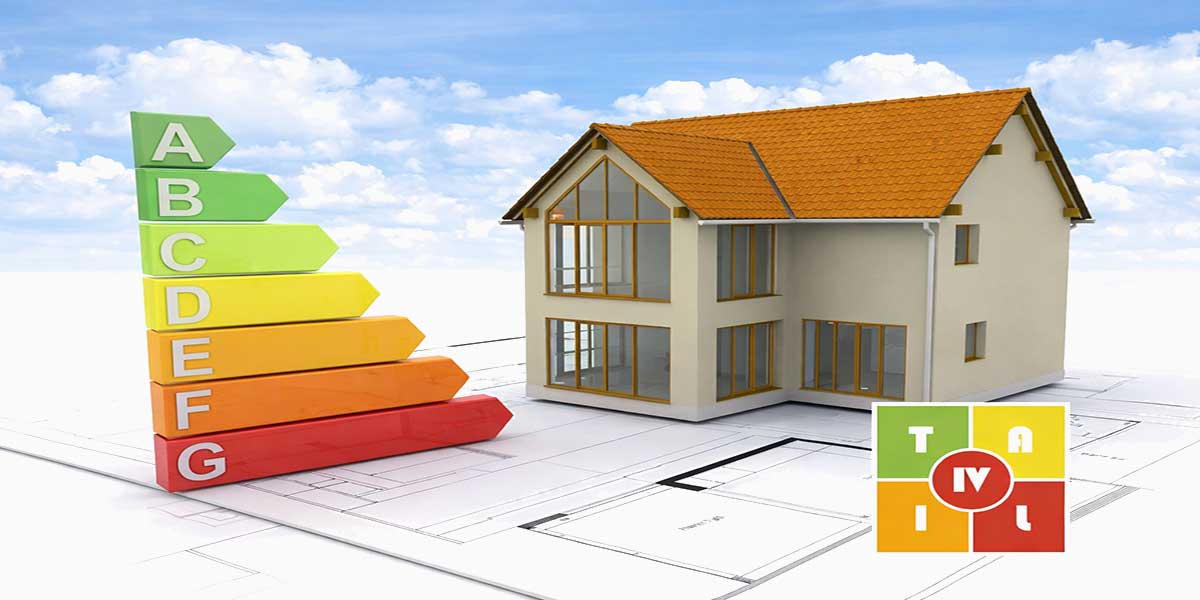
EPBD 2026 and indoor air quality are becoming inseparable in the way building quality is assessed in Europe. As of May 2026, the new version of the Energy Performance of Buildings Directive (EPBD) requires that buildings be evaluated not solely on energy consumption but on the overall quality of the indoor environment.
This means that building performance must be assessed using multiple interrelated parameters, not just the energy class.
TAIL – Four Components of Building Quality Assessment
Modern approaches to indoor environmental evaluation follow a systemic logic. Due to it, building quality is assessed through four interrelated components:
- T – Thermal comfort
- A – Acoustics
- I – Indoor air quality
- L – Lighting
Each component receives its own category.
So, in this context, it is important to note how the authors of the TAIL framework describe its role. As Pawel Wargocki (DTU), one of the system’s authors, states, TAIL represents a promising solution – simple to implement, scientifically grounded, and validated by a large body of measurements.
Four Categories, but One Final Rating
The overall indoor environmental category equals the weakest component’s category.
No averaging, weighting, or compensation.
Poor air quality can no longer be “offset” by good interior design, lighting, or low energy consumption. If the air quality is poor, the building quality is poor as well.
SEE ALSO: EPBD: Energy-Efficient Buildings Need Healthy Indoor Air
EPBD 2026 and Indoor Air Quality: How the Limits Are Defined
Indoor air quality limits are not arbitrarily determined. They are derived from the existing European and international regulatory framework.
It is important to emphasize that the WHO value of 5 µg/m³ for PM2.5 represents a health-based guideline for outdoor air. The European Union has adopted 10 µg/m³ as the regulatory target for the upcoming period. Reference values used in modern rating systems are aligned with the applicable European regulatory framework.
Regulatory Sources of Reference Values
Modern indoor environmental assessment systems rely on: EN 16798 standard, World Health Organization (WHO) health guidelines, European regulatory reference values for outdoor air and Euratom Directive on radon (2013/59).
SEE ALSO: New EU Air Quality Regulations
Indoor environmental assessments use thresholds adapted to real building conditions. Outdoor air infiltration, ventilation systems, filtration efficiency, and indoor pollution sources are all taken into account.
The TAIL methodology does not introduce new health limits for pollutants. It systematizes existing reference values into a unified I-IV category framework, enabling measurable and comparable assessment of building quality.
The Air Pollution Exposure Paradox
For decades, regulatory attention has focused primarily on outdoor air, where pollution limits are generally lower than those for indoor air. At the same time, people spend on average nine times more time indoors.
According to data from the United Nations and the World Health Organization, only 1% of the global population breathes outdoor air that meets the latest health guidelines. This further emphasizes the importance of controlling indoor air quality. According to the U.S. Environmental Protection Agency (EPA), indoor air can be 2–5 times more polluted than outdoor air.
Therefore, indoor air exposure accounts for the majority of human exposure throughout the life cycle. Integrating air quality into building performance assessment represents an important regulatory step forward.
Parameters That Determine Indoor Air Quality Rating
The indoor air quality rating under EPBD 2026 is not based on a single indicator. It includes multiple measurable parameters. As with the overall building rating, the indoor air quality category is determined by the weakest measured parameter.
CO₂ – Ventilation Indicator
CO₂ concentration is used as an indicator of ventilation adequacy. EN 16798 defines indoor environment categories based on increases in CO₂ concentration above outdoor levels.
The highest-quality category typically corresponds to approximately +350 ppm above the outdoor concentration, while lower categories allow greater deviations.
In practice, values above approximately 1,000 ppm often indicate an insufficient supply of fresh air, although specific limits depend on the outdoor concentration and the applied standard.
SEE ALSO: Pettenkofer Number – CO₂ and Indoor Air Quality
SEE ALSO: CO₂ in Your Home – Is It There and Where Does It Actually Come From
PM2.5 – Fine Particles
Fine particles are associated with cardiovascular and respiratory diseases. WHO recommends 5 µg/m³ as the annual outdoor air limit, while the EU sets 10 µg/m³ as its regulatory target.
In indoor environmental rating systems, concentrations below 10 µg/m³ are considered high quality, while concentrations above 25 µg/m³ are considered the lower limit of acceptability.
Achieving high categories in urban environments depends on effective ventilation and filtration.
SEE ALSO: 11 Questions and Answers: How PM2.5 Particles Affect Health
Formaldehyde and Benzene – Chemical Risks
For chemical pollutants, there is no comfort zone—only varying levels of health risk.
The WHO specifies 100 µg/m³ as a short-term reference value, while concentrations below 30 µg/m³ are often considered to be in the high-quality range.
For benzene, the EU sets 5 µg/m³ as the annual outdoor air limit, while values below 2 µg/m³ are considered an ambitious high-quality threshold.
Benzene is carcinogenic with no safe threshold, meaning risk increases with concentration.
Radon – Natural Radioactive Gas
The Euratom Directive defines 300 Bq/m³ as the reference value for indoor spaces, while concentrations below 100 Bq/m³ are considered high quality in modern assessment systems.
What EPBD 2026 and Indoor Air Quality Mean for Design and Renovation
EPBD 2026 and indoor air quality introduce a new responsibility in building design. Energy efficiency cannot be considered separately from indoor environmental quality.
This has several direct implications:
- Ventilation systems must be properly sized, not minimally designed.
- Filtration must match real outdoor pollution levels.
- Energy renovation must not worsen indoor conditions.
- Airtightness must be accompanied by adequate controlled ventilation.
Sealing a building without ensuring ventilation can lead to increased concentrations of CO₂, VOCs, and moisture. In such cases, risk shifts from the energy domain to the health domain.
Renovation of existing buildings, which make up the majority of Europe’s building stock, requires a particularly careful and integrated approach. Air quality must be part of the design documentation, not a subsequent correction.
Monitoring and Management: Air Quality as a Measurable Obligation
EPBD 2026 implies that air quality is not a declarative category but a measurable parameter. This means:
- continuous monitoring of CO₂ and other relevant indicators,
- analysis of actual concentrations rather than design assumptions,
- adjustment of ventilation system operation according to occupancy load.
Reliable building assessment requires measurable indoor air quality data. Continuous monitoring enables system optimization. System optimization is essential for compliance with EPBD 2026 requirements.
In this context, ventilation and filtration are no longer merely technical installations. They become part of the building management’s regulatory responsibility.
Ventilation, Filtration, Air Purification, and Continuous Monitoring
Air quality is not static. It varies with outdoor pollution, the number of occupants, emissions from construction and finishing materials, and the operation and adjustment of ventilation systems.
Therefore, air quality assessment cannot be a one-time activity.
Continuous monitoring enables:
- timely response to deviations,
- optimization of ventilation system performance,
- preservation of energy efficiency without compromising health.
Practice shows that technically well-designed ventilation, adequate filtration, and air purification can significantly reduce indoor concentrations of PM2.5 and other pollutants.
SEE ALSO: Mini Case Study – Apartment Ventilation in Belgrade
Conclusion
As thermal comfort, acoustics, lighting, and air quality are now integrated into a single performance rating, building quality must be evaluated as a balanced whole. Consequently, architecture and interior design alone cannot compensate for inadequate ventilation and air treatment systems.
In a system where the weakest component determines the overall rating, air quality becomes the decisive factor.
Categorization thresholds are not arbitrary. They are based on existing standards, health guidelines, and European regulatory frameworks. What is new is that these reference values are now integrated into a rating system that is measurable, comparable, and transparent, such as TAIL.
Such an approach inevitably affects design, renovation, and the long-term value of buildings. As implementation progresses, indoor environmental quality will become an integral part of assessing a building’s overall qualitative and investment value.
EPBD 2026 and indoor air quality further emphasize the importance of the fields in which Marquis Intelligence has been operating for years – energy-efficient ventilation and integrated air purification.
If the air is poor, the building quality is poor.
This is no longer a rhetorical message. It is a technical principle and a regulatory reality.
Sources
- REHVA Journal (2026). The TAIL Rating Scheme: A promising performance metric and a solution for assessing indoor environmental quality (IEQ) in buildings. Pawel Wargocki, Corinne Mandin. REHVA European HVAC Journal, Volume 63, Issue 1, February 2026.
- Directive (EU) 2024/1275 on the energy performance of buildings (EPBD recast)
- EN 16798-1:2019 – Energy performance of buildings – Ventilation for buildings
- WHO Global Air Quality Guidelines 2021
- EU Ambient Air Quality Directive (revised 2024)
- Euratom Directive 2013/59 on radon protection
This Marquis Intelligence text is part of the series “Air Quality and Ventilation Standards.”
Document number: MI-NewLegislation-007.26 – EPBD 2026 and Indoor Air Quality – If the Air Is Poor, the Building Is Poor.
