

Blog
Air Pollution and Diabetes – New Scientific Insights

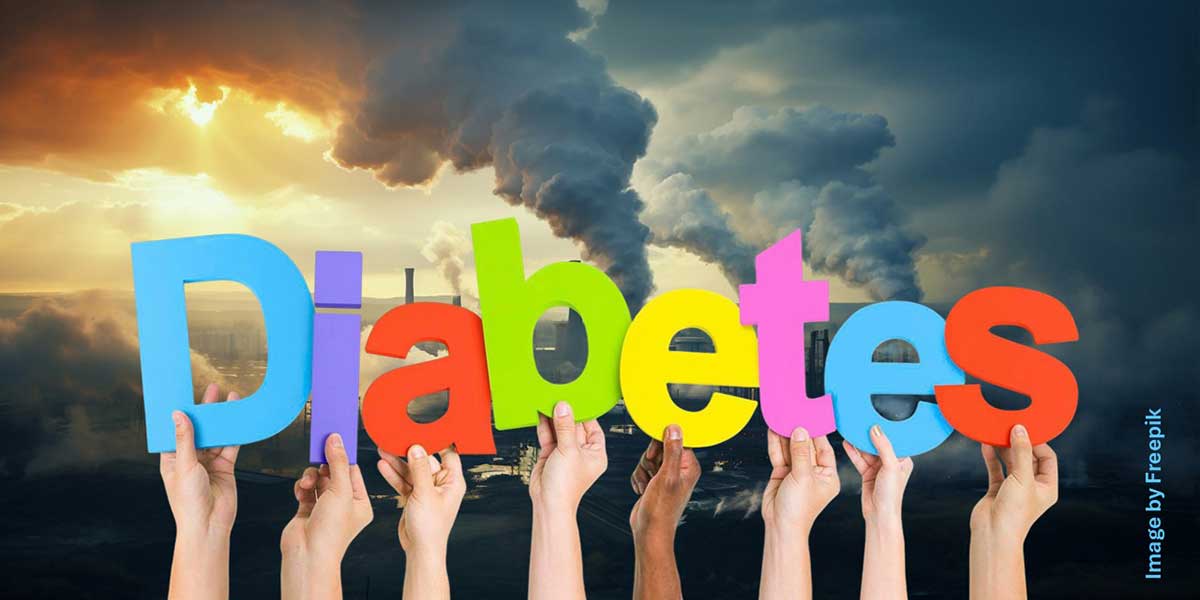
Air pollution and diabetes are closely linked, according to the latest scientific findings.
Air pollution has long been recognised as one of the major modern health risks.
It is associated with cardiovascular, respiratory, and vascular diseases.
However, scientists now warn that its effects go much further.
There is growing evidence that air pollution can disrupt metabolic processes in the body and increase the risk of developing type 2 diabetes.
Yes, you read that right.
The onset and development of type 2 diabetes may be caused not only by poor diet, lack of physical activity, stress, and genetics, but also by polluted air.
Polluted air is increasingly recognised as a new and equally dangerous risk factor for the development of this disease. While earlier research primarily focused on particulate pollution (PM₂.₅ and PM₁₀), more recent studies have also included other air pollutants.
The latest papers frequently link air pollution and diabetes to the presence of nitrogen dioxide (NO₂) and ozone (O₃).
Unfortunately, the results are alarming. All these compounds increase the likelihood of developing the disease.
How Air Pollution Contributes to the Development of Diabetes
Type 2 diabetes is now one of the most widespread diseases in the world. According to the Mayo Clinic, it occurs when the body either fails to use insulin properly or does not produce enough of it. Traditionally, causes have been attributed to genetics, obesity, and lifestyle.
However, an increasing number of studies show that air pollution plays an important, yet previously underestimated, role. Inhaling polluted air can cause chronic inflammation and oxidative stress. This disrupts insulin function and interferes with glucose balance in the blood.
As a result, there is mounting evidence that breathing polluted air can alter metabolic processes in the body. Consequently, the risk of developing various diseases – including type 2 diabetes – increases.
SEE ALSO: How Air Pollution Contributes to the Formation of Cataracts
SEE ALSO: Air Pollution and Cancer – A New Dimension of Risk
Air Pollution and Diabetes – Can the Impact Be Measured?
“Exposure to PM₂.₅ particles is associated with a 10% increase in the risk of type 2 diabetes for every 10 µg/m³ increase in concentration,” stated Professor Francesco Forastiere of Imperial College London during the WHO webinar ‘Toxic Air is Fueling NCDs’.
These claims are confirmed by the latest meta-analyses from 2025.
The results show that the likelihood of developing type 2 diabetes increases by approximately:
- 12% with exposure to PM₂.₅ and PM₁₀ particles
- 9% with exposure to nitrogen dioxide (NO₂)
- 5% with exposure to ozone (O₃)
In other words, the air we breathe has a direct and quantifiable impact on the risk of developing one of today’s most common chronic diseases.
However, we should not overlook other air pollutants and their effects on health and lifespan. The air also contains volatile organic compounds, sulphur oxides, heavy metals, and so-called ‘forever chemicals’.
Where Does All This Pollution Come From?
According to the European Environment Agency (EEA), the primary sources of air pollution in Europe are transport, energy production, industry, and domestic heating.
The pollutants that most burden air quality are fine particles (PM₂.₅ and PM₁₀), nitrogen dioxide (NO₂), and ozone (O₃).
- PM particles (PM₂.₅ and PM₁₀) are generated by the combustion of fossil fuels, solid-fuel heating, and industrial processes. They easily penetrate the lungs and bloodstream, causing inflammatory reactions.
- Nitrogen dioxide (NO₂) mainly originates from traffic and fuel combustion in power plants. It irritates the respiratory tract and promotes oxidative stress.
- Ozone (O₃) is not emitted directly but forms through chemical reactions in the atmosphere between nitrogen oxides and volatile organic compounds, especially during warm, sunny days.
This combination makes pollution and its health effects pervasive – both outdoors and indoors.
PFAS, or ‘forever chemicals’ (per- and polyfluoroalkyl substances), have become a global public health problem. Research links them to certain types of cancer, hormonal disorders, reduced fertility, immune system damage, as well as type 2 diabetes and other chronic diseases.
SEE ALSO: PFAS or ‘Forever Chemicals’ – Hype or Real Threat?
Air Pollution – Outdoors and Indoors
Although most scientific studies focus on outdoor air, the average person spends only about 10% of their life outdoors. By contrast, around 65% of our lifetime is spent in our homes. This makes indoor air quality just as important – if not more so – than outdoor air quality.
Indoors, concentrations of PM particles, nitrogen oxides, and chemical vapours are often two to five times higher than outdoors.
This means that every home, office, or school can become a microenvironment where pollution affects health on a daily basis. Such exposure may increase the risk of metabolic disorders such as type 2 diabetes.
Fortunately, indoor air quality can be controlled – thanks to modern technologies.
Solutions That Make a Difference
For years, Marquis Intelligence has been developing advanced ventilation systems with integrated air purification, ensuring clean, safe, and healthy indoor air.
Controlling indoor air quality is one of the most effective ways to prevent the long-term consequences of pollution.
SEE ALSO: Home and Apartment Ventilation
SEE ALSO: MCS – Apartment Ventilation in Belgrade
Conclusion
Future scientific research should include several key elements – if it hasn’t already.
Firstly, we need more detailed studies on the impact of indoor air pollutants, where humans spend most of their lives.
Secondly, it is essential to consider the synergistic effects of various pollutants on human, plant, and animal health.
Finally, we should consider the secondary effects of polluted air on human health, including exposure through food, water, and drinks contaminated by polluted atmospheres.
In any case, this is a comprehensive and long-term process that requires commitment and shared responsibility – scientific, social, and personal.
Clean air is not a luxury, but a fundamental human right.
Scientific Sources
- https://doi.org/10.1016/j.envres.2025.120885
- https://doi.org/10.1093/toxsci/kfu250
- https://doi.org/10.1016/j.heha.2023.100062
This article is part of the ‘Air Pollution and Health’ series, in which Marquis Intelligence, as a socially responsible company, highlights the negative impact of polluted air on human health.
Document: MC-AP&H-010.25 – Polluted Air and Diabetes – New Scientific Insights.
