

Blog
Wearing Protective Masks – Needs and Threats

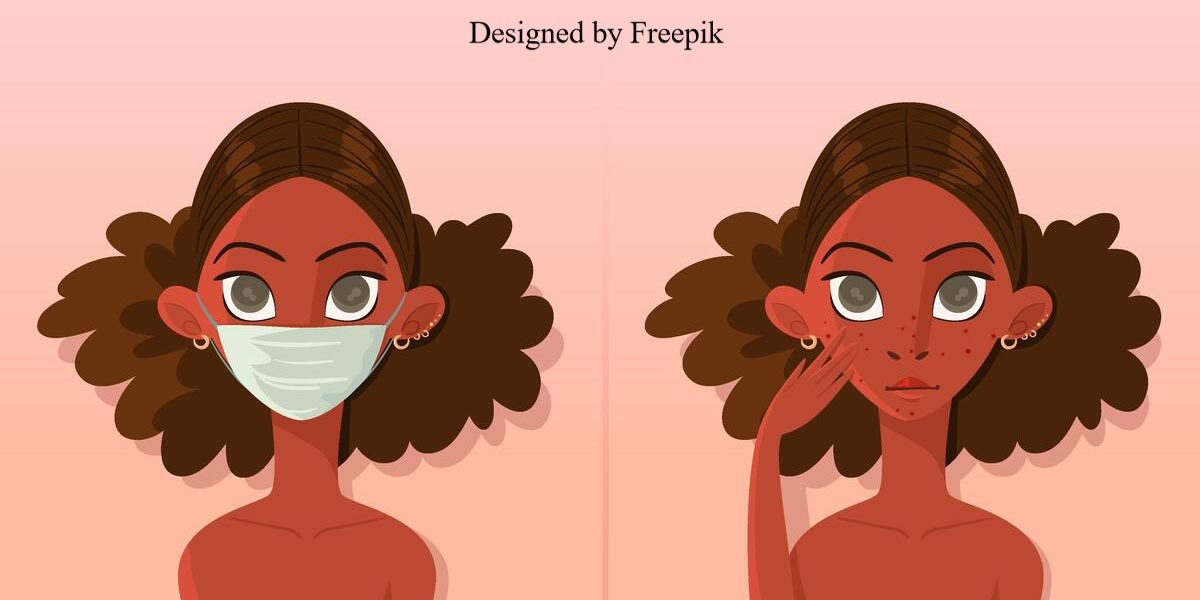
The winter of 2019 marked the beginning of the global COVID-19 pandemic caused by the SARS-CoV-2 virus, which, according to the World Health Organization, has claimed 7,052,472 lives as of June 23, 2024. During the pandemic, various protective measures, including wearing masks, were mandated to reduce the risk of infection transmission.
Effectiveness of Protective Masks
Numerous studies have examined the effectiveness of different types of protective masks, showing that their efficacy depends on the type of mask and its proper fit on the face. A fascinating insight was revealed in a recent scientific study conducted in an office environment. According to a recent study (DOI: 10.1080/02786826.2021.2003291), the penetration of 0.12 µm particles through N95 masks is 1.7 ± 0.5%, through KN95 masks is 3.7 ± 2.6%, and through cloth masks is 26.4 ± 9.3%.
A 2004 study (DOI: 10.1016/j.jaerosci.2004.05.006) recorded a significant reduction in particle penetration through N95 respirators and surgical masks thanks to continuous ion emission, which can be crucial for providing additional respiratory protection.
Impact on Performance and Subjective Feelings
A recently published scientific study (DOI: 10.1016/j.buildenv.2024.111248) provides fascinating insights into the impact of mask-wearing on cognitive performance, physiological parameters, and subjective feelings in a simulated office environment:
Cognitive Performance:
- Grammatical Logic Test: Accuracy declined over time for all conditions (no mask, wearing surgical masks, and KN95 masks), with lower average accuracy when wearing surgical masks compared to no mask.
- Visual Choice Reaction Test: After 80 minutes, accuracy significantly decreased when wearing surgical masks compared to tests performed without masks.
- Stroop Test: Accuracy slightly improved when wearing KN95 masks compared to no mask. Given the very small effect, it may have been coincidental.
Physiological Parameters:
- Regardless of the type of mask, parameters such as pNN50 (a measure of heart rate variability), ETCO2 (end-tidal carbon dioxide), and facial skin temperature significantly increased compared to the condition without masks.
- Wearing masks caused physiological changes suggesting increased mental workload.
Subjective Feelings:
- Wearing a mask reduced the perceived quality of the thermal environment and air quality.
- The perception of unpleasant odors significantly increased, while the perception of air quality significantly decreased.
- The intensity of SBS (Sick Building Syndrome) symptoms significantly increased.
- Sleep quality significantly improved after wearing KN95 masks, indicating greater fatigue induced by mask-wearing.
Fatigue and Health Symptoms:
- Complaints of fatigue were significantly higher when wearing any type of mask.
- Spontaneous complaints were more frequent when wearing KN95 masks than surgical masks.
- Wearing masks did not significantly affect subjects’ long-term sleep quality or lung function.
Conclusion
These findings are significant for understanding the broader impact of prolonged mask use, particularly in work environments where wearing masks is necessary, and cognitive performance is crucial. Hopefully, the scenario of the COVID-19 pandemic will never be repeated.
