

Blog
The Great Smog of London (1952)

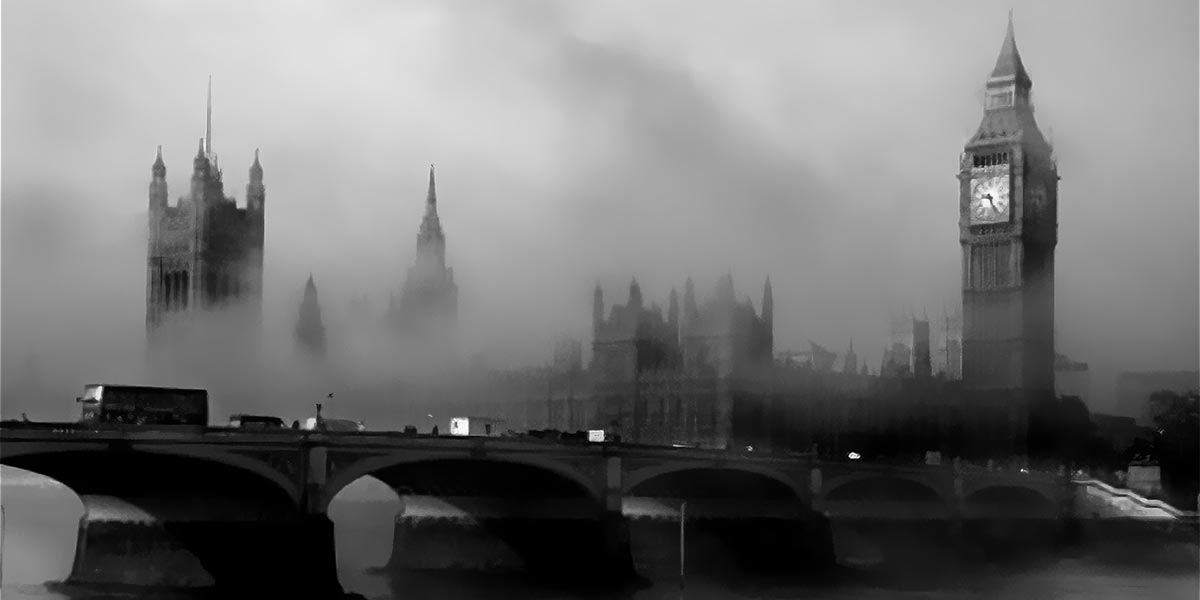
On December 5, 1952, a thick and deadly fog descended upon London, marking one of the most catastrophic air pollution events in history. Known as The Great Smog of London, this toxic mix of smoke and fog engulfed the city for five days, claiming thousands of lives and forever changing how the world perceives air quality. Unfortunately, similar scenes of air pollution are still being recorded worldwide.
What Happened During the Great Smog of London?
In the weeks leading up to this tragic event, a harsh winter forced Londoners to burn large quantities of coal to stay warm. The coal was of poor quality, and its incomplete combustion released enormous amounts of smoke laden with soot particles and sulfur dioxide (SO₂). Sulfur dioxide reacts with water vapour to form sulfuric acid (H₂SO₄) aerosols, significantly increasing smog’s toxicity.
At the same time, an atmospheric high-pressure system created a temperature inversion layer that trapped these substances near the ground. Combined with emissions from factories and vehicles, this resulted in dense, poisonous, and deadly smog.
Life in London came to a halt. Pedestrians stumbled through the streets, unable to see their feet. Traffic slowed to a standstill, and police officers used torches to direct vehicles. The smog was not just an inconvenience. It was lethal. In the following days and weeks, thousands succumbed to respiratory and cardiovascular diseases.
Events like this clearly demonstrate how dangerous smog can be to human health. Even today, similar pollution episodes continue to threaten urban populations worldwide.
>> SEE ALSO: Smog Threatens Health – Is There a Way Out?
Grim Parallels: Then and Now
Today, images of smog-covered cities eerily resemble scenes from London in 1952. Have we learned nothing? In the modern world, air pollution sometimes seems even more hazardous. In poorer areas, especially during winter, waste materials, including plastic, rubber, and wood composites, are frequently burned. This practice, along with the use of low-quality fossil fuels, releases harmful substances into the air, severely impacting health and the environment.
Air quality remains one of the most pressing challenges worldwide. From urban centers in Asia to wildfires in North America, the fight for clean air continues.
The Consequences of the Great Smog of London
The Great Smog of London was a wake-up call for policymakers and the public. It led to the enactment of the Clean Air Act of 1956, which regulated coal-burning and established smokeless zones in urban areas. This marked the beginning of a proactive approach to combat air pollution in industrialized cities.
Yet, air pollution remains a critical issue, compounded by climate change and its effects on ecosystems and human health.
What Can We Learn Today?
Although the Great Smog is a historical event, its lessons remain relevant. Modern cities face similar challenges. Fine particulate matter (PM2.5) and other harmful substances may not always be visible, but their impact on human health and the environment is undeniable. Regulatory bodies continue to tighten standards in response to scientific evidence (for example, the EPA’s recent reduction in the permissible PM2.5 concentration).
>> SEE ALSO: EPA, USA Reduces Permissible Concentration of Harmful Particles in The Air with The New Standard
>> SEE ALSO: New EU Air Quality Regulations
At Marquis Intelligence, we believe clean air is not a luxury but a necessity and a right for all. Through advanced ventilation and air purification systems, we aim to create healthier indoor environments, ensuring that tragedies like the Great Smog of London remain a part of history.
A Living Memory of the Great Smog of London
Although the Great Smog of London belongs to history, for some it remains a vivid personal memory.
When this article was first published, we received a comment from Mr. Alan Gregory of London, who had witnessed the event as a child.
“The buses were led by a man holding a lamp. We lived in a shared house heated by coal.”
– Alan Gregory, fire safety expert for kitchen ventilation ducts
His words remind us that behind every environmental crisis stand real people, real families, and lived experiences that statistics alone cannot fully capture.
The Great Smog of London underscores the devastating consequences of neglecting air quality. As we face the challenges of climate change and urbanization, the question arises:
What steps can we take today to ensure clean air for current and future generations?
This text is part of the series “Learn More About Air Through History and People” from the archives of Marquis Intelligence.
Document: MI-LAH-002.24 – The Great Smog of London (1952)
