

Blog
Is There a Connection Between Air Pollution and Hearing Loss?

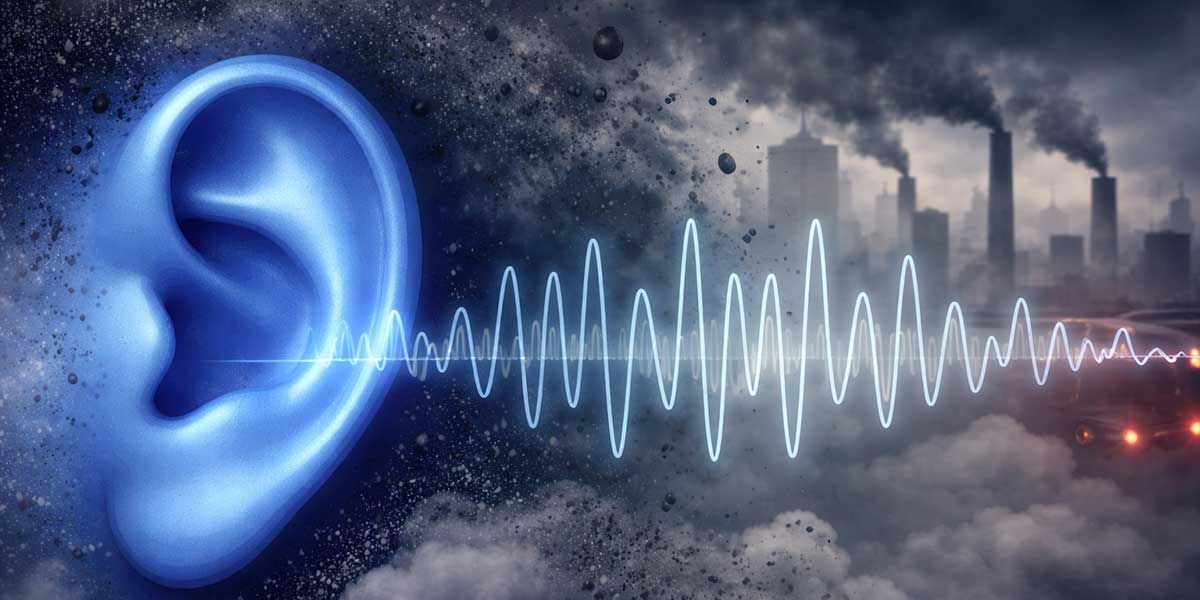
Although it may sound like science fiction, an increasing number of scientific studies show that air pollution and hearing loss are closely connected.
This is not about a single isolated study. In recent years, a growing body of research has examined this topic. Their findings suggest a link between long-term exposure to polluted air and an increased risk of sensorineural hearing loss.
What Is Sensorineural Hearing Loss?
Sensorineural hearing loss is the most common form of permanent hearing impairment.
It occurs when the structures of the inner ear—primarily the cochlea or the auditory nerve—become damaged.
Inside the cochlea are extremely sensitive cells known as hair cells. These cells convert sound waves into electrical impulses that the brain interprets as sound.
Unlike many other cells in the human body, these cells do not regenerate. Once they are damaged, hearing loss is usually permanent.
More information about this type of hearing impairment can be found on the Cleveland Clinic website.
How Can Air Pollution Affect Hearing?
Interestingly, the connection between air pollution and hearing loss is not related to direct exposure of the ear to polluted air.
Air pollutants enter the body through breathing. They reach the alveoli in the lungs and can pass through the thin alveolar wall into the bloodstream. From there, they may trigger inflammatory processes that affect various organs. This can lead to oxidative stress, inflammatory reactions, and microcirculation disorders.
The inner ear is particularly sensitive to changes in blood flow. Even small reductions in circulation can damage structures in the cochlea. Air pollutants may also increase the production of reactive oxygen species (ROS)—unstable molecules capable of damaging cells and causing their degeneration.
For these reasons, scientists believe that long-term exposure to air pollution may increase the risk of sensorineural hearing loss, although the exact mechanisms are still being investigated.
Some studies also suggest that air pollution may amplify the negative effects of noise, further increasing the risk of hearing damage.
Air Pollutants Associated With Hearing Problems
Epidemiological studies link several different air pollutants with an increased risk of hearing impairment.
PM2.5 and PM10 – Fine Particulate Matter
Fine particulate matter is one of the most widely studied and most dangerous forms of air pollution.
It is produced by traffic emissions, industrial processes, fossil fuel combustion, and residential heating systems.
Because of their small size, PM2.5 particles can penetrate deep into the lungs and then enter the bloodstream. In this way, they may affect multiple organs in the body—including the heart, lungs, and brain.
For this reason, the European Union sets strict exposure limits for this pollutant. The recommended annual average concentration is 10 µg/m³.
Nitrogen Dioxide (NO₂)
Nitrogen dioxide is mainly generated by road traffic, diesel engines, and thermal power plants.
Some studies have shown that long-term exposure to high concentrations of NO₂ may be associated with approximately 63% higher risk of hearing loss.
Carbon Monoxide (CO)
Carbon monoxide is produced during incomplete fuel combustion. Typical sources include vehicle exhaust gases, boilers, furnaces, fireplaces, solid-fuel stoves, and charcoal grills.
CO reduces the ability of blood to transport oxygen. As a result, sensitive tissues such as those in the inner ear may become more susceptible to damage.
Research indicates that high exposure to CO may be associated with around 45% higher risk of hearing loss.
Sulfur Dioxide (SO₂)
Sulfur dioxide is generated during the combustion of sulfur-containing fossil fuels—particularly lower-quality coal, heavy fuel oils, and certain industrial processes.
SO₂ contributes to inflammatory processes and oxidative stress in the body.
Air Pollution and Other Sensory Organs
Air pollution does not affect only the sense of hearing—it can also affect vision.
A large scientific study conducted in China found a link between exposure to PM2.5 particles and an increased risk of diseases affecting the eyes and ears.
Other studies have already shown a connection between air pollution and certain eye diseases. Cataracts, for example, may also be linked to air pollution.
SEE ALSO: How Air Pollution Contributes to Cataract Formation
Scientific studies have also shown that polluted air can negatively affect the sense of smell and the sense of taste. On the other hand, the potential influence of air pollutants on the sense of touch has so far been almost completely absent from scientific research.
Does Polluted Air Directly Damage the Ear?
Studies linking air pollution and hearing loss mostly describe the systemic effects of pollutants after they enter the body through inhalation.
In other words, hearing damage does not occur because polluted air directly contacts the ear.
The external ear canal has its own protective mechanisms against airborne pollution.
Cerumen, commonly known as earwax, traps dust particles and microorganisms. It also has antibacterial and antifungal properties and prevents particles from entering deeper parts of the ear.
For this reason, doctors generally do not recommend excessive cleaning of the ear canal.
Where Are We Most Exposed to Air Pollution?
Exposure to air pollution depends largely on the environments where people spend their time.
Humans spend up to 90% of their time indoors, which means that indoor air quality has a major influence on total exposure to pollution.
Although the highest concentrations of pollutants in outdoor air are typically recorded in urban areas with heavy traffic, industrial zones, and regions where solid fuels are used for heating, this air inevitably enters indoor spaces. Pollution does not require a special invitation. It enters through building openings, windows, and doors.
Inside buildings, additional pollution occurs due to cleaning products, cooking emissions, and other indoor sources. As a result, indoor air is often more polluted than outdoor air. The U.S. Environmental Protection Agency (EPA) states that indoor air is typically two to five times more polluted than outdoor air.
This means that a significant portion of total exposure to pollution occurs indoors.
Can Household Air Purifiers Help?
Room air purifiers can improve indoor air quality, but their effectiveness depends on the type of pollution.
Most residential devices are designed to remove particulate matter such as PM2.5, typically using HEPA filters.
However, gaseous pollutants such as NO₂, CO, and SO₂ are much more difficult to remove. Standard household devices often have limited efficiency in removing these gases.
Can Ventilation Help?
Properly designed ventilation systems can significantly improve indoor air quality.
Ventilation enables the supply of filtered outdoor air, dilution of indoor pollutants, and removal of contaminated air from the space. This is essential for maintaining healthy indoor air.
In this process, pollutants are removed from the incoming air, while carbon dioxide produced by breathing and pollutants generated inside the space are simultaneously removed.
Continuous air exchange can significantly reduce pollutant concentrations.
However, if this air exchange is uncontrolled and energy inefficient, it leads to unnecessary energy consumption, increasing the carbon footprint and pollution generated during energy production. Such an approach cannot be considered environmentally sustainable.
For this reason, ventilation systems require heat recovery units, which transfer energy from exhaust air to incoming air.
SEE ALSO: Plate or Rotary Heat Recovery Units
The effectiveness of ventilation systems ultimately depends on several factors, including design quality, equipment selection, proper installation, and system maintenance.
Conclusion
Air pollution affects far more than the respiratory system.
A growing number of scientific studies indicate that long-term exposure to polluted air may increase the risk of hearing impairment—particularly sensorineural hearing loss.
Although the exact mechanisms are still being studied, these findings further highlight the importance of improving air quality and reducing exposure to pollution.
Through its projects and professional activities, Marquis Intelligence continuously emphasises the importance of healthy indoor air and its impact on human health.
Sources
https://doi.org/10.3390/ijerph17061969
https://doi.org/10.1016/j.envres.2023.117392
https://www.nature.com/articles/s41598-025-92952-3
https://doi.org/10.1016/j.isci.2024.110697
https://doi.org/10.1016/j.scitotenv.2022.153124
This text is part of the “Air Pollution and Health” series, in which Marquis Intelligence, as a socially responsible company, highlights the negative impact of polluted air on human health.
Document: MC-AP&H-012.26 – Air Pollution and Hearing Loss: Is There a Connection?
